
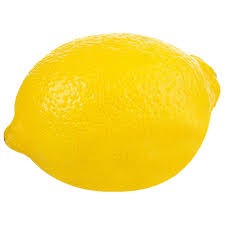
 As I mentioned in a post from the other day, when I decided to create an Amherst Writers and Artists-style workshop centered on food, I started reading the Stories from the Kitchen collection and then someone sent me to this interesting and helpful piece in Poets and Writers. The writer attends a class about food writing, and Corrine, the instructor, says to describe a lemon.
“Look again,” said Corinne. “Is the color of the skin uniform or does it change at the tip where it was attached to the tree? Think about the texture, the weight of it in your hand. Is the skin smooth or rough? Does it have bumps? Is it gummy or taut? Are there any bruises on it? If I slice it open, what’s it like inside? Don’t just tell me it smells good or tastes good. Is it sour, sweet? Faintly floral? Does the flavor have layers to it on your tongue? And how did that fruit or vegetable get into your palm? How did it grow? Was it picked or did it fall off the tree? Is it fresh? How can I tell if it’s ripe? And how might I use it in a recipe?”
I felt as if I were being whisked back to Creative Writing 101, except that in the fiction workshops I’d taken, we’d talked mostly about character, plot, and maybe a bit about setting. If we talked about objects—casually referred to as “telling details”—we did so mostly in terms of scenery. Rarely had we examined objects with such intensity. Never, as far as I could recall, had we thought of an object as a process, with a life in its own right whose properties evolve over time.
What that instructor does, and I must say I admire it very much, is what I would like to do in these AWA workshops: to go deeper, to elicit ideas, memories and feelings that are unexpected and unexpectedly true. Not hurrying, not flitting by the thing, not being workmanlike about it but digging, giving it attention, letting something unfold.
We’re not doing restaurant reviews. We’re about something bigger. The Amherst Writers and Artists method is a social movement that tries to uplift and ennoble every soul, through, in part, the belief that every person can produce literature, in his or her own voice, from his or her own experience. So we will approach food like that.
More to come.
…. Ciao–CT
