
Dear Reader,
As I did when writing the column for Salon.com,
when I had a freedom to write what I wanted which was unthinkable and nearly limitless,
when I would try to reach you by a bridge of words, by a rhythm of speech, by speech that was not just words but sound and music,
as I did when I tried to reach a magical moment of consonance between us,
unraveling the terror of an orphan on the streets or a wife bereft of personhood and full of sorrow,
as I tried to find my way into the prose blindfolded, looking only for a shimmer in my shoulders or a sudden prickling or shivering in the hairs on my arms and a choking feeling before crying that would signal I was getting close to the true object,
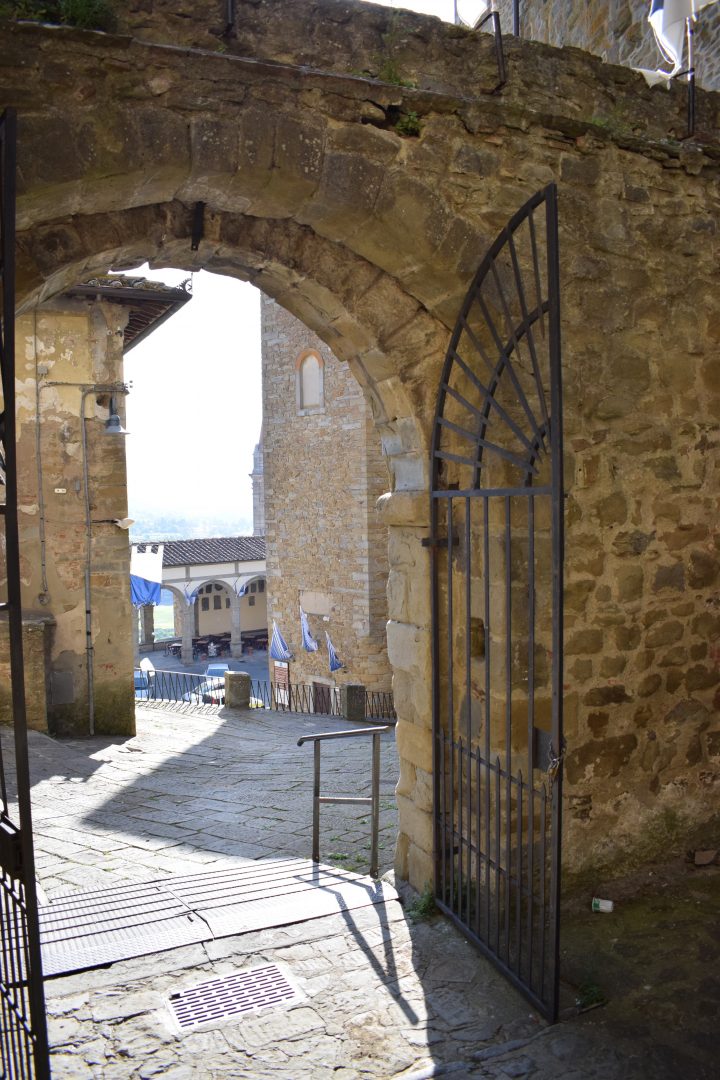
as I tried to do every day when writing the column for Salon.com I am also trying to do now in writing about Italy, to say how we rode a train from Florence to Castiglion Fiorentino, how the tall white-haired Italian Alfeo Tanganelli came in his Fiat to pick us up with our luggage, how he regarded us with warmth and puzzlement,
how I understand now how strange it must have been to him, how little sense it made that we had come there, how he must have wondered why we were there,
so … what I’m saying is … with that very same freedom and looseness of limb with which I wrote the column I reach out to you now and say that we have this in common: Me and you and Ishmael of Melville’s Moby Dick, that when things are bad, when there seems no way out, we jump, we board a ship, we travel. We do a new thing. We pick a place and go there. We take a leap.
Where does the willingness to take that leap come from? Some people call it “the gift of desperation”: you would rather die on the high seas seeking the unknown than live in a world where every day repeats the day before, where every day goes one day deeper into the tube that narrows and grows dark and eventually leaves you bound hand and foot, gagged and strangling while reading the London Times.
So I imagine you, dear reader, sitting at a desk by a window reading this book with your feet up on an overturned trashcan; there is a cigarette burning in the ashtray even though you said just last night that you have quit smoking, and there are things on your mind that you have told no one: One of the things you have told no one is that you are more unhappy than you admit.
This is a condition of America.
I ask your agreement on something: I ask you to entertain the notion that our surface thoughts and beliefs are the opposite of our emotions and desires. This is not a new thought but living in this other layer of opposite beliefs and thoughts, this is the realm of writing, and writing, carrying us along on this other train of thought, this is a way of getting to our reliably real and thus durable selves, and desires: The things we really want. The things we don’t say or can’t say. The things that are liminal, voiceless, the beyond.
We keep reaching for the beyond.
In San Francisco, in America, I was more unhappy than I admitted. I was no different from anybody else. I wanted something new and different.
Before every therapy session I always thought I knew what to talk about but once I was seated it became clear that I did not know my own emotions, what was happening underneath.
Knowing this was good. It prepared me for constant surprise: I think I want to talk about this issue I am having with the book but what moves me to tears is the way I never got to say goodbye to my mother when she died.
It is that way with Italy: I think I came here because prices were low and we could hold our workshops at Le Santucce, but it turns out I came here and am writing this book because I heard the voice of a woman who died leaping to flee a fire in the year 1707, probably from the very room in which I was sleeping. I heard her voice and it was compassion and that was not what I had come for. I thought I had come for the cheap living and the opportunity, the practical thing, but it looks like I really came for the compassion and the warmth, the kindness of people.
What I mean is, we really don’t know what we’re doing, do we? But we do it anyway and in doing it we find out.

Please let us know when the book comes out. Great beginning!